
Every November of my childhood, my parents and sister and I made the two-hour drive to Twiller Stree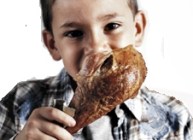 t in Albany to spend Thanksgiving with my grandparents, who did not believe in food.
Maybe that’s harsh. It was more that my grandparents viewed eating as a weakness.
My parents, on the other hand, worshipped food, the more the better. They collected freezers and spent much of their free time filling them. They bought burlap sacks of sweet corn from local farmers for a penny an ear, splurging on two hundred ears at a time. My sister and I husked, our mother scalded, and our father stripped off the kernels, packed the containers, and stacked them in the freezer. After wiping the counters clean, we would stand in front of the open freezer with the frosty air washing over us and admire our bounty. It felt like having our own Fort Knox of food.
https://searchingformalcolmdotcom.wordpress.com/wp-admin/media-upload.php?post_id=93&type=image&TB_iframe=1Our lust was not limited to vegetables. My father made monthly pilgrimages to the Western Beef House in Albany, often recruiting me to ride shotgun with him on our ’57 Chevy’s broad bench seat. Sawdust blanketed the floor of the meat market, shoetop-deep to suck up wayward animal blood. Sam the butcher would reach over the counter, dangling a rubbery slice of bologna for me. I would carefully bite out eyes, a nose, and mouth, and hold up my artwork for Sam’s approval before gobbling down my bologna smiley face.
At home my dad wrapped the meat in white freezer paper and lovingly labeled the parcels: Prime Rib, Lamb Chops, Pork Roast, Sirloin Tips, Pork Chops, Ground Beef, Calves Liver, Salami, Bologna, Liverwurst, and Bacon.
For my parents, towers of corn kernels and rib roasts must have seemed like fair compensation for four years of World War II rationing and C-rations. But for my mother’s mother and stepfather, the Great Depression never ended. They would forever see food as a luxury; even a single stale saltine was a treat too valuable to squander on a grandchild.
My sister and I spent the first two weeks of every summer vacation at our grandparents’ camp. We swam in the lake a half dozen times each day. Between swims, if we had a dime, we sometimes walked the half-mile to George’s store for a soda. Other times we hiked up the mountain, tiptoeing past the old barn where the creepy guy lived with his draft horses.
But what I remember most about those weeks at the camp wasn’t the adventure, or swimming, or spending time with my cousins. What I remember was starving half to death.
No matter how silently I snuck into the kitchen in search of food, my grandpa Petey would always magically appear.
“What are you getting into now?” his gotcha voice would startle me from the doorway.
Saltines were about the only snack I ever found. Even those lacked crunch and carried the same musty smell as the camp. But if I doctored them up with a pat of butter, it mostly disguised the taste.
“Did anyone say you could have that?” Petey would ask, as though he didn’t already know the answer.
Shamed, I would place the cracker back and neatly fold over the waxed paper column to seal it.
“Land’s sakes alive,” my grandma would say, joining this teachable moment. “If we didn’t keep an eye on you, you’d eat us right out of house and home.”
On Thanksgiving the adults all crowded into my grandparents’ tiny dining room around a table packed so full of crystal stemware that just passing the sweet potatoes raised a chorus of chiming glasses. We could have been the models for Norman Rockwell’s Thanksgiving painting, Freedom from Want. But in our picture, the turkey my grandparents presented was smaller—and we had way more people waiting for helpings.
Head-bowed, Grandpa Petey would bless the meal, and then tack on a waste-not, want-not sermon about dark meat versus white meat (he made the same pitch for egg yolks every morning, which my sister and I didn’t like any better than dark turkey meat).
We kids were safely tucked around a card table in a corner of the kitchen—away from the good china. My grandmother delivered a plateful of drumsticks and thigh meat. Cousin Kenny—who was six years older than me—mesmerized us by passing his finger slowly through the candle flame.
After one such meal I snuck upstairs to the single bathroom in the house to “concentrate.” My feet dangled as I perched on the edge of the massive old-fashioned toilet, fearful that I might pitch backwards into the bowl. After flushing, I burst out the door and straight into Grandpa Petey, who dug his talons into my shoulders.
“Don’t…use…so…much…toilet…paper,” he rasped, shaking me with each word for emphasis. “It costs money and you’re flushing it down the drain.”
His turkey tie dangled in my face, giving me a close up view of a big greasy stain.
“You only need one or two sheets,” he continued. “You were spinning it off the roll like there’s no tomorrow.”
I nodded and managed a weak, “Okay,” vowing to myself never to “concentrate” in his house again. One or two sheets? What was he, crazy?
I’m sure he was no crazier than I am now. It’s just that his spirit had snagged at a single spot in time, like a plastic bag marooned high in the branches of a streamside tree after a hundred-year flood. He’d been consigned to relive some distant, grim Thanksgiving, year after year.
I travel back in time on Thanksgiving too, reconnecting with that knobby-kneed kid in search of a Saltine cracker. All day, until our evening meal, I avoid eating. These days, it’s the only time I experience hunger. Only by recalling the want, it seems, can I be thankful for the plenty.
Then I stretch out on the living room floor while my grandchildren climb all over me as if I were a soft, graying jungle gym. They’re welcome to all the leftovers, and all the paper products, they want.
 Searching for Malcolm